A nuclear submarine is one of the most complex engineering objects ever built. Housing over a hundred people for months at a time hundreds of meters underwater, it must maintain air, fresh water, food, heating, and pressure control while operating a nuclear reactor, navigating silently, and remaining capable of either hunting enemy submarines or launching ballistic missiles that can reach targets anywhere on Earth. Every system operates under conditions that would destroy conventional equipment, and the margin for error in any critical system is essentially zero.
Buoyancy and the Ballast System
Submarines control their depth by varying their overall density relative to seawater. When a submarine is on the surface, large ballast tanks located between the inner pressure hull and the outer hydrodynamic hull are filled with air. To submerge, flood valves at the bottom of the ballast tanks open, letting seawater in while air escapes through vents at the top, increasing the submarine's total mass until it exceeds the weight of displaced water and it sinks.
Precise depth control uses smaller trim tanks and variable ballast tanks, adjusted by pumping water in or out using seawater pumps. Control surfaces, the diving planes and rudder, work like an aircraft's control surfaces to pitch and steer the submarine when it has forward motion. At low speed or hovering, fine ballast adjustment is the primary depth control method. The entire ballast management system must respond within seconds, because changes in water temperature and salinity alter seawater density unexpectedly.
The Pressure Hull: Engineering Against Crush Depth
The fundamental engineering challenge of submarine design is the pressure hull, the inner hull that maintains atmospheric pressure for the crew while resisting the enormous external pressure of deep ocean water. Seawater pressure increases by approximately one atmosphere per 10 meters of depth. At 300 meters, a typical operating depth for modern attack submarines, the external pressure is 31 atmospheres, roughly 450 pounds per square inch.
Modern submarine pressure hulls are constructed from high-yield-strength steel, typically exceeding 100,000 psi yield strength. The hull is shaped as a cylinder or series of cylinders, the optimal geometry to withstand uniform external pressure without bending. Every weld is inspected with ultrasound and X-ray, because a weld defect is a potential initiation point for catastrophic failure. The engineering safety margin between operating depth and crush depth is typically about 1.5 to 2.0. Titanium pressure hulls, used in the Soviet Alfa-class and K-278 Komsomolets, offer superior strength-to-weight ratios that allow considerably greater operating depths, but at manufacturing costs several times those of steel hulls and with more demanding welding requirements. The K-278 reached a record depth of 1,020 meters in 1984, more than double the operating depth of contemporary Western submarines, demonstrating the engineering potential of titanium construction.
Nuclear Propulsion: Freedom from the Surface
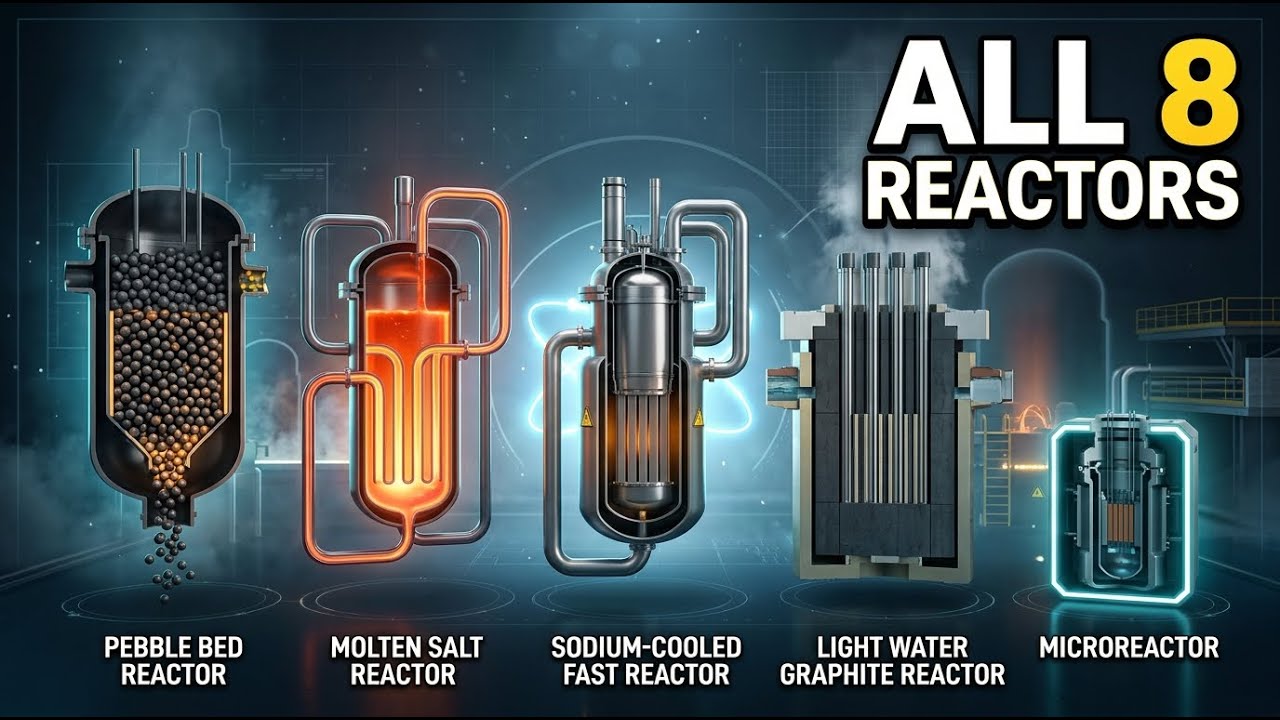
Conventional submarines run on diesel engines when surfaced and electric motors from batteries when submerged. Battery capacity limits submerged endurance to a few days at slow speed; the submarine must periodically come to periscope depth to run the diesels and recharge. Nuclear propulsion eliminates this constraint entirely. A naval nuclear reactor using highly enriched uranium fuel can operate for 25 to 33 years without refueling, and the only consumables that limit submerged endurance are food for the crew.
The reactor on a modern nuclear submarine produces high-pressure steam that drives a turbine connected through a reduction gear to the propeller shaft. The entire propulsion plant operates silently compared to diesel engines, contributing to the submarine's acoustic stealth. Modern designs use natural circulation of coolant at low power settings, eliminating pump noise entirely.
Acoustic Stealth: The Hunt for Silence
Modern nuclear attack submarines are designed to be acoustically stealthier than the ocean background noise, making them effectively undetectable by passive sonar at tactically relevant distances. Machinery is mounted on resilient mounts that isolate vibrations from the hull. The hull itself is covered in anechoic tiles, rubber compounds that absorb incoming sonar pulses and suppress the submarine's own noise radiation. Propellers are designed with computer-optimized blade geometry to minimize cavitation, the creation of vapor bubbles that collapse noisily.
American submarines and, increasingly, Russian Yasen-class submarines operate at noise levels below the ambient ocean noise, making passive acoustic detection essentially impossible except at very close range. This acoustic advantage is central to submarine tactical doctrine: if the adversary cannot hear you, they cannot engage you. The pursuit of silence drives every design decision from propeller tip geometry to the routing of hydraulic lines through the hull, and it requires a manufacturing precision and quality-control discipline comparable to that of aerospace construction. Even minor hull imperfections or improperly installed mountings that would be inconsequential on any other vessel can introduce detectable acoustic signatures on a modern attack submarine.
Life Support: Sustaining a Crew at Depth
Maintaining a habitable environment inside a submarine is a complex engineering problem in its own right. Nuclear submarines generate oxygen by electrolysis, splitting seawater into hydrogen and oxygen using electrical power drawn from the reactor. Oxygen is fed into the submarine's atmosphere while hydrogen is either burned in a catalytic burner or vented overboard through a mast at periscope depth. Carbon dioxide exhaled by the crew is absorbed by monoethanolamine scrubbers that chemically bind CO2, which is then periodically vented overboard. Backup lithium hydroxide canisters can absorb CO2 without electrical power.
Fresh water is produced by distillation using waste heat from the reactor. Temperature, humidity, and atmospheric pressure are carefully regulated to maintain crew performance through patrols extending beyond three months. Every major piece of machinery is mounted on vibration-isolating rafts, and the submarine's accommodation spaces are designed to keep crew away from the loudest equipment. Life inside a nuclear submarine is a total engineering system in which the human beings are simultaneously the mission payload and the most complex variable: a crew of over a hundred people must function at peak capability through weeks of confinement, elevated CO2 levels, disrupted sleep cycles, and zero contact with the outside world. Managing that human element has driven advances in ergonomics, watch-standing schedules, lighting systems that mimic natural circadian rhythms, and nutrition programs designed to maintain cognitive performance through the full length of a patrol.
Strategic Ballistic Missile Submarines
The most strategically significant submarines are the SSBNs, which carry submarine-launched ballistic missiles (SLBMs) as a second-strike nuclear deterrent. The American Ohio-class SSBN carries 24 Trident II D5 missiles, each capable of carrying multiple independently targetable warheads to targets over 11,000 kilometers away. A single Ohio-class submarine carries more destructive power than was expended in all of World War II combined.
The strategic value of SSBNs derives from their survivability. Unlike land-based missiles or aircraft, a submarine on patrol is nearly impossible to locate and destroy in a first strike. This survivability guarantees second-strike capability, which is the foundation of nuclear deterrence: knowing you cannot disarm an adversary's nuclear forces with a first strike removes the incentive to attempt one. The United Kingdom's Vanguard-class submarines, France's Triomphant-class, and China's expanding Jin-class fleet all fulfill this same role, making the ballistic missile submarine the cornerstone of deterrence for every naval nuclear power in the world. The engineering investment required to build and sustain these vessels—each a decades-long program requiring specialized shipyards, nuclear certification processes, and a dedicated industrial base—reflects just how central submarine technology has become to the architecture of international security.