Fighter jet generations are a classification system used by aerospace engineers and military analysts to group combat aircraft by their defining technologies and tactical capabilities — from the first-generation subsonic jets like the F-86 Sabre, through the supersonic dogfighters of the Vietnam era, all the way to the stealth-capable, sensor-fused machines of the modern F-22 Raptor and the emerging sixth-generation programs. Understanding these generational leaps reveals how propulsion, aerodynamics, avionics, and weapons technology have continuously redefined what it means to dominate the skies.
What Defines a Fighter Jet Generation?
The term 'generation' in the context of fighter aircraft is not a formally standardized military designation — it is an analytical framework that groups aircraft sharing similar technological capabilities and tactical roles. Each generation is broadly defined by a cluster of innovations: engine performance, airframe design, radar and sensor capability, weapons integration, and electronic warfare systems. As one set of technologies matures and a new breakthrough emerges, a generational shift occurs. These shifts do not happen overnight; overlapping periods of development mean some aircraft straddle two generations, while others define an era entirely on their own.
First Generation: The Dawn of the Jet Age
First-generation fighters emerged in the final years of World War II and proliferated rapidly in the late 1940s and early 1950s. These aircraft replaced piston-powered propeller planes with turbojet engines, but they retained many design concepts from their propeller-driven predecessors — straight or only mildly swept wings, relatively simple gunsights, and no radar to speak of. Top speeds hovered around Mach 0.8, just below the sound barrier.
The most iconic first-generation fighter is the North American F-86 Sabre, which flew combat missions during the Korean War against the Soviet-built MiG-15. Both aircraft represented the cutting edge of this generation: fast for their time, armed with cannons and unguided rockets, and relying entirely on pilot eyesight and skill in close-range dogfights. The limitations were stark — no missiles, no radar targeting, and engines that were thirsty and temperamental.
Second Generation: Breaking the Sound Barrier
The second generation, spanning roughly the mid-1950s to the early 1960s, is defined by the achievement of supersonic flight in level flight — not just in a dive, but in sustained cruise conditions. Swept and delta wings replaced straight wings, enabling aircraft to slice through the transonic regime with far less drag. Engines became more powerful and reliable, and for the first time, radar systems were integrated into the nose of combat aircraft.
Perhaps more importantly, the second generation introduced the first air-to-air missiles. The AIM-9 Sidewinder, a heat-seeking infrared missile, and the AIM-7 Sparrow, a radar-guided weapon, fundamentally changed air combat doctrine. Designers — and military planners — began to believe that missiles would render the gun obsolete. This assumption, as the Vietnam War would prove, was dangerously premature. Notable second-generation aircraft include the F-104 Starfighter, the F-105 Thunderchief, and the Soviet MiG-21.
Third Generation: The Multi-Role Supersonic Fighter
Third-generation fighters arrived with the conflicts of the 1960s and represent a period of rapid learning — both from combat experience and from advances in aerodynamics and avionics. These aircraft could exceed Mach 2, carried more sophisticated pulse-Doppler radar systems, and were designed to perform both air superiority and ground attack missions. Variable-geometry wings, seen on aircraft like the F-111 and the Soviet MiG-23, attempted to give pilots the best of both worlds: high-speed performance and low-speed maneuverability.
The McDonnell Douglas F-4 Phantom II stands as the defining aircraft of this generation. Originally designed without an internal gun — reflecting the missile-centric doctrine of the era — the Phantom was famously adapted to carry a gun pod after early Vietnam combat exposed the limitations of early missile reliability and the continued need for close-range gunfighting. The F-4 served with the U.S. Navy, Air Force, and Marine Corps, as well as more than a dozen foreign air forces, and its adaptability made it one of the most produced Western fighters of the Cold War.
Fourth Generation: Fly-by-Wire and the Energy Maneuverability Revolution
The fourth generation, which began entering service in the mid-1970s and continues to populate air forces worldwide today, represents the most consequential leap in fighter design since the jet engine itself. This generation was driven by the lessons of Vietnam, where kill ratios fell far short of expectations. The answer was a return to dogfighting capability, combined with radically new technology to support it.
The key innovations of fourth-generation fighters include:
- Fly-by-wire flight control systems: Replacing mechanical linkages with electronic signals, fly-by-wire allows computers to interpret pilot inputs and maintain stability in flight regimes that would otherwise be uncontrollable. This enables deliberate aerodynamic instability, which dramatically improves agility.
- High thrust-to-weight ratios: New turbofan engines like the Pratt and Whitney F100 gave aircraft like the F-15 Eagle and F-16 Fighting Falcon enough power to climb nearly vertically and sustain high-G maneuvers.
- Pulse-Doppler radar with look-down/shoot-down capability: Earlier radars could not distinguish aircraft from ground clutter. Pulse-Doppler radar solved this, enabling beyond-visual-range (BVR) engagements against low-flying targets.
- Multi-role flexibility: Fourth-generation aircraft were designed from the start to carry a wide range of precision-guided munitions, anti-ship missiles, and electronic warfare pods.
The F-15, F-16, Soviet Su-27, and MiG-29 are the iconic representatives of this generation. Later 'fourth-generation-plus' or '4.5-generation' upgrades added active electronically scanned array (AESA) radar, helmet-mounted cueing systems, and infrared search and track (IRST) sensors, keeping many of these airframes competitive well into the 21st century.
Fifth Generation: Stealth, Sensor Fusion, and Supercruise
Fifth-generation fighters represent the current pinnacle of operational combat aircraft. They are defined by three capabilities that, taken together, represent a revolution in air combat: low-observable stealth technology, sensor fusion, and supercruise.
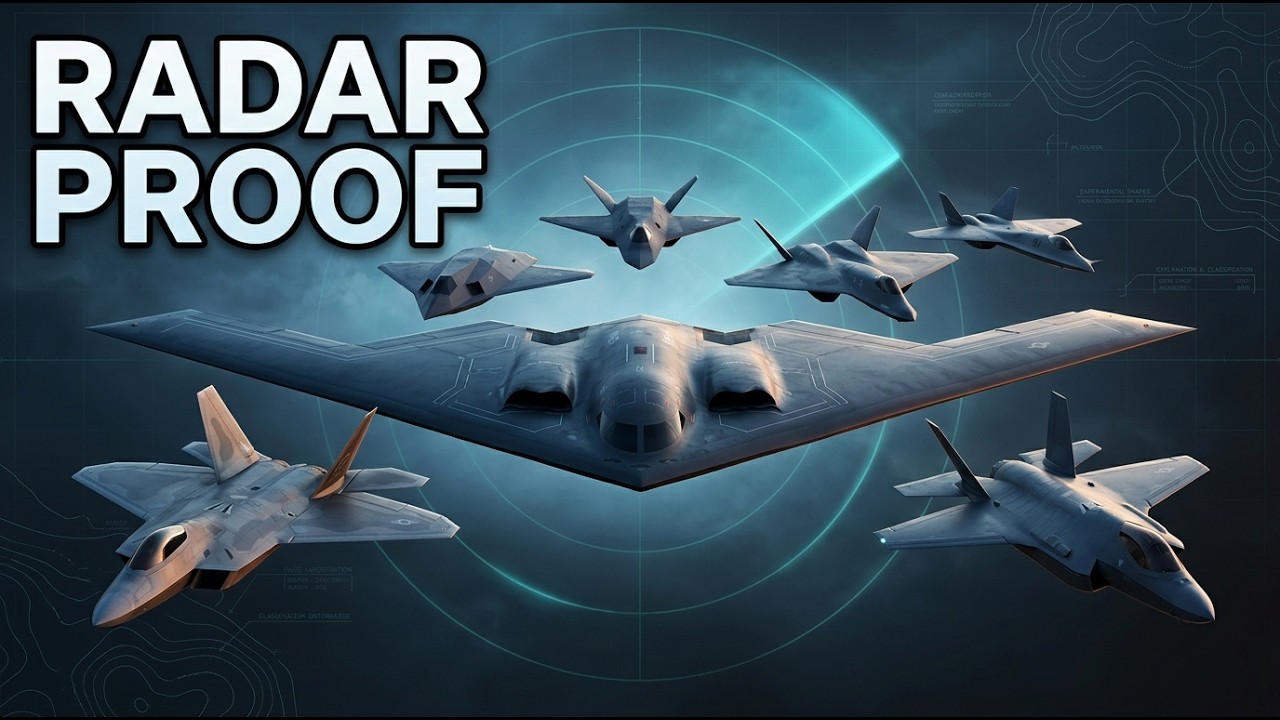
Stealth is not invisibility — it is a dramatic reduction in radar cross-section achieved through careful shaping of the airframe, radar-absorbent materials, and internal weapons carriage. The F-22 Raptor and F-35 Lightning II both carry their weapons internally to avoid the radar return that external pylons create. The F-22, designed primarily for air superiority, is widely considered the most capable air-to-air fighter ever built. The F-35, designed around a networked multi-role concept, prioritizes sensor fusion — the ability to combine data from multiple onboard and off-board sensors into a single coherent tactical picture displayed to the pilot.
Supercruise, demonstrated by the F-22, is the ability to sustain supersonic flight without using fuel-hungry afterburner. This allows fifth-generation aircraft to operate at high speed for extended periods, expanding the engagement envelope and making interception by older aircraft nearly impossible. The combination of low observability and supercruise means an F-22 can choose when and how to engage with exceptional freedom.
Sixth Generation: The Next Frontier
Sixth-generation fighter programs — including the U.S. Next Generation Air Dominance (NGAD) program, the UK-led Tempest, and the Franco-German-Spanish Future Combat Air System (FCAS) — are currently in various stages of development and remain largely classified. What is publicly known suggests these aircraft will push beyond fifth-generation capabilities in several key areas.
Anticipated characteristics of sixth-generation fighters include directed energy weapons such as high-powered lasers, optionally manned or fully unmanned configurations, artificial intelligence-assisted combat decision-making, and the ability to command and coordinate autonomous loyal wingman drones in the battlespace. Hypersonic performance and even more advanced stealth coatings are also expected. These aircraft represent not just an evolution of the fighter jet but potentially a redefinition of what a 'fighter' means in networked, multi-domain warfare.
Why Generational Leaps Matter
Each generational transition has shifted the balance of air power decisively. First-generation jets made piston-engine fighters obsolete overnight. Fifth-generation stealth has fundamentally complicated the air defense calculus of every nation on Earth. The lesson of fighter jet history is that technological advantage in the air translates directly to strategic freedom on the ground — and that advantage, once lost, is extraordinarily difficult to recover. For engineers, pilots, and strategists alike, understanding these generations is not merely an academic exercise; it is a map of how the future of warfare is being written in the sky.